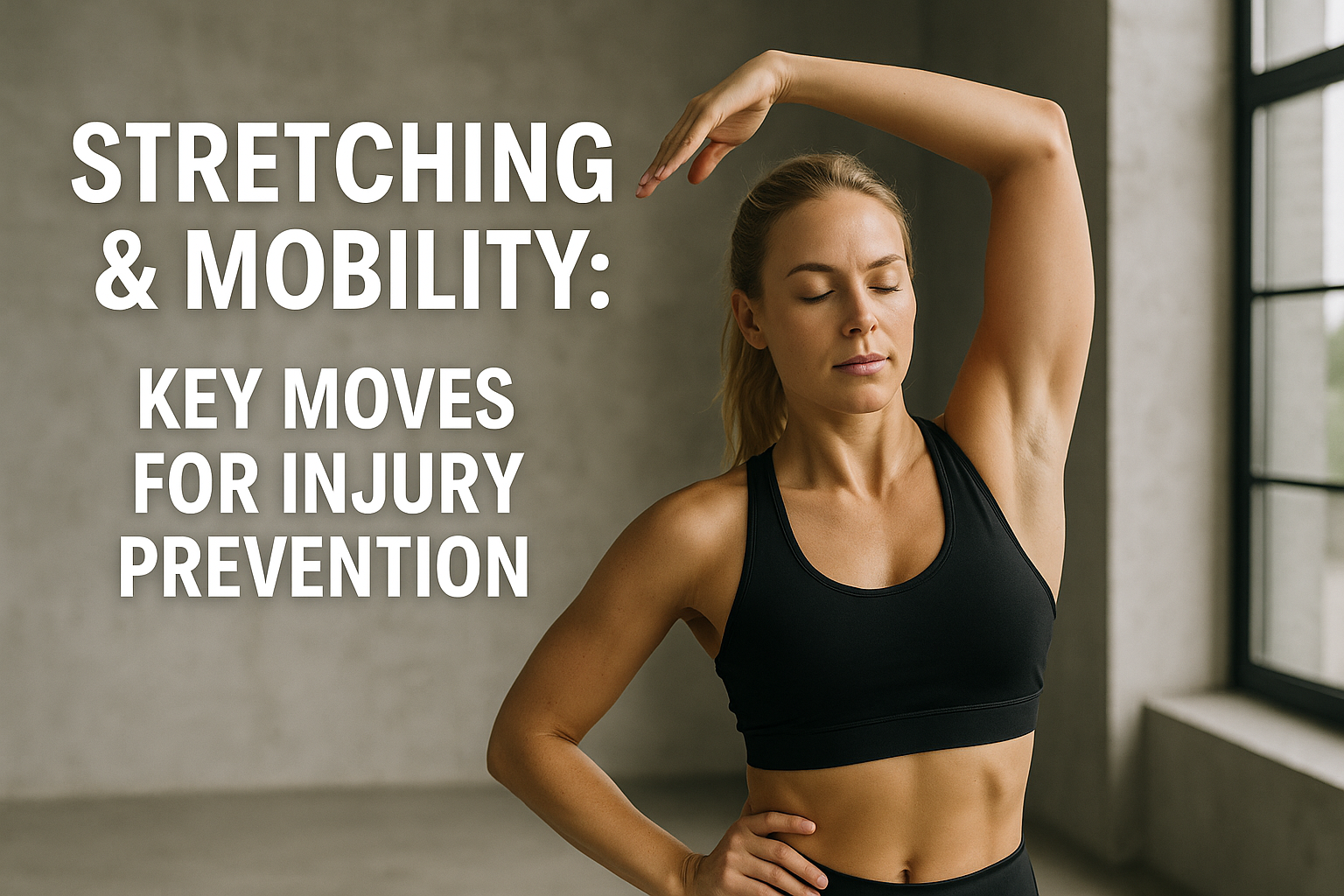
Regularly incorporating a targeted stretching routine and mobility exercises into your fitness plan is one of the best ways to reduce the risk of injury and improve overall performance. Whether you’re an athlete, weekend warrior, or desk-bound professional, these essential moves will help maintain joint health, increase flexibility, and support injury prevention.
Why Stretching & Mobility Matter
- Enhanced Range of Motion: Improved joint flexibility allows muscles to move through their full spectrum without strain.
- Better Muscle Coordination: Mobility work helps the nervous system coordinate muscle activation, reducing compensatory movement patterns.
- Reduced Muscle Stiffness: Regular stretching decreases post-exercise soreness and stiffness, speeding recovery.
- Injury Prevention: Flexible joints and mobile muscles are less prone to tears, strains, and overuse injuries.
Essential Mobility Exercises
1. Hip Flexor & Quadriceps Stretch
Tight hip flexors can lead to lower-back pain and reduced stride length. Perform:
- Step into a deep lunge with right foot forward and left knee on the ground.
- Shift hips forward until you feel a stretch in front of the left hip and thigh.
- Hold for 30 seconds, then switch sides.
- Repeat 2–3 times per side.
2. World’s Greatest Stretch
This dynamic sequence improves thoracic spine and hip mobility:
- Start in a high plank position.
- Step right foot outside right hand, lower hips into a lunge.
- Rotate torso to the right and reach right arm toward the ceiling.
- Return hand to the ground, step back to plank, and repeat on the left side.
- Perform 5–6 reps per side.
3. Thoracic Spine Windmill
Enhances upper-back rotation essential for overhead movements:
- Lie on your side with knees bent at 90°, arms extended in front.
- Keep lower body stable, lift top arm and sweep it in an arc toward the opposite side, opening the chest.
- Return to start. Perform 8–10 reps per side.
4. Ankle Dorsiflexion Mobilization
Improving ankle flexion reduces knee and hip compensation:
- Stand facing a wall with one foot a few inches away.
- Keeping heel down, bend knee forward to touch the wall.
- Move foot closer/farther to find maximum dorsiflexion without heel lift.
- Perform 10–12 reps per side, 2 sets.
5. Lateral Lunge with Reach
Mobilizes hips, groin, and ankles while engaging the core:
- Stand with feet wide. Shift weight to the right and bend the right knee, keeping left leg straight.
- Reach left hand toward right foot and rotate torso to look up at left hand.
- Return to center and repeat on the opposite side.
- Perform 8–10 reps per side.
Designing Your Stretching Routine
Follow these guidelines to build an effective stretching routine:
- Frequency: Aim for 3–4 sessions per week, ideally after workouts or during active rest days.
- Duration: Hold static stretches for 20–30 seconds. Dynamic moves like the World’s Greatest Stretch can be performed for time or reps.
- Intensity: Stretch to the point of mild tension, never pain.
- Progression: Gradually increase range of motion as mobility improves.
Tips for Safe Practice
- Warm up with light cardio or dynamic movements before deep stretches.
- Breathe deeply and maintain a relaxed pace to enhance muscle relaxation.
- Focus on form—quality of movement over quantity of reps.
- Listen to your body—modify or skip exercises if you experience sharp pain.
Conclusion
Incorporating these mobility exercises and static stretches into your fitness regimen will support long-term injury prevention and improve overall movement quality. Commit to a consistent routine, and you’ll enjoy enhanced flexibility, reduced soreness, and a stronger, more resilient body.